

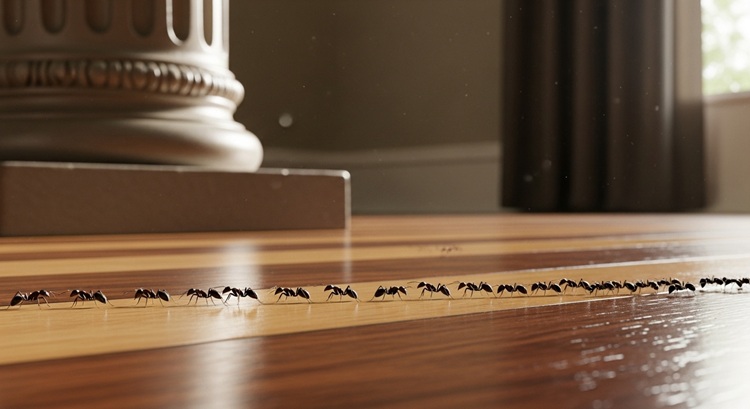
It can be puzzling to find ants indoors, especially when your home seems clean and well cared for. Ants in Corinth remain active most of the year due to mild weather and constant development. Ants appear inside homes for a clear reason. So, it is important to understand what draws them in. This will help you respond to the issue with confidence and prevent repeat visits. Also, you can work with technicians at Romney Pest Control to help you address an infestation and ensure ants do not come back. Here are reasons ants may end up inside your home in Corinth:
Easy Access Through Small Openings
Ants only need tiny cracks near doors, windows, and foundations to enter a home. Also, they can take advantage of gaps around utility lines or siding. New openings may appear as homes settle over time. Ants use these routes to move from soil or exterior walls into kitchens, bathrooms, or basements.
Food Sources That Go Unnoticed
Ants enter homes in search of food. They are usually drawn to crumbs, spills, and food residue. Kitchens and dining areas serve as top targets, but ants also explore pantries, trash areas, and pet feeding spots. Sweet foods attract ants most, though grease and protein also appeal to certain species. Trash cans without tight lids provide another food source.
Moisture and Water Access
Ants are attracted to leaky pipes, dripping faucets, and damp areas to stay hydrated. That is why they usually gather in bathrooms, laundry rooms, and under-sink cabinets. Periods of rain in Corinth may push ants indoors when outdoor nests flood. Moist soil near foundations also draws ants close to the home.
Weather Changes the Force Movement
Seasonal changes influence ant behavior. Heavy rain, heat waves, or sudden cold snaps disrupt outdoor nests. Ants search for a reliable shelter when conditions become harsh. Homes offer warmth and protection, which makes them appealing during weather changes. Ants often enter through low points near foundations or crawl spaces during these times.
Landscaping Close to the House
Mulch, shrubs, and plants placed close to exterior walls give ants cover and easy access to homes. Ants often nest in mulch or under decorative stones. Trees or branches that touch the home provide a bridge indoors. From there, ants may find entry points near windows or rooflines.
Existing Ant Trails and Nest Proximity
Ants rely on scent trails to guide their colony. These trails may still exist if ants have entered your home before. This makes repeat visits more likely, even after a brief absence.
Nearby nests also increase indoor sightings. Ant colonies may live under patios, driveways, or near the foundation. From these spots, ants explore nearby structures in search of resources.
Why Ants Keep Coming Back
Ants continue to return once they identify a reliable food or water source. Cleaning visible ants alone does not remove scent trails that guide others. Routine cleaning helps, but it works best alongside sealing entry points and removing attractants. Vinegar or soap solutions may disrupt trails, though prevention remains the long-term solution.
Making Homes Less Attractive to Ants
Homeowners can control ants with some habits. They should wipe counters, sweep floors, and store food in sealed containers to reduce appeal. Also, they need to empty trash on a regular schedule and rinse recyclables before storage. Moisture under sinks and around appliances must be checked regularly. If ants continue to appear despite prevention steps, professional support may help. Experts locate nests, identify species, and address entry points with precision.
Ant issues in Corinth often link to outdoor conditions as much as indoor habits. So, it is essential to address both sides to get the best results and restore comfort inside the home.